
YST 350 Pipes and Tubes
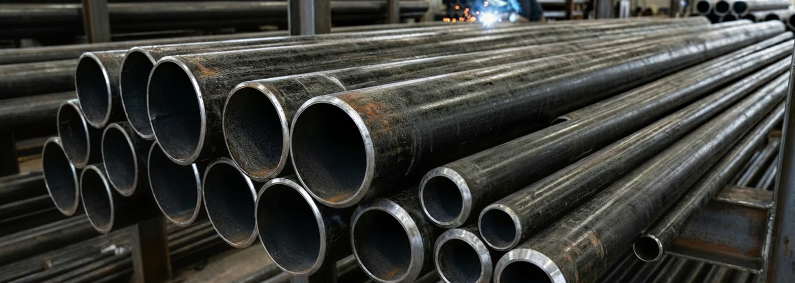
For structural projects where higher load capacity, durability, and optimized material usage are critical, YST 350 pipes and tubes are widely specified. Designed for demanding structural applications, this grade offers enhanced strength compared to conventional structural steel pipes, making it suitable for modern engineering requirements.
YST 350 pipes are typically manufactured in accordance with Indian standards such as IS 1161 and IS 4923, where “YST” denotes yield strength and “350” represents a minimum yield strength of 350 MPa. This higher strength level allows engineers to design lighter yet stronger structures, improving both performance and cost efficiency.
Compared to lower grades, YST 350 offers improved resistance to deformation under load, making it a preferred choice in large-scale infrastructure, industrial construction, and heavy fabrication projects.
Mechanical Properties
| Property | Value | Unit |
|---|---|---|
| Yield Strength (min.) | 350 | MPa |
| Tensile Strength | 490 – 630 | MPa |
| Elongation | 18 – 22 | % |
| Hardness | ~150 – 200 | HB |
| Density | 7.85 | g/cm³ |
| Modulus of Elasticity | 200 | GPa |
Chemical Composition
| Element | Typical Range (%) |
|---|---|
| Carbon (C) | ≤ 0.20 |
| Manganese (Mn) | 1.2 – 1.6 |
| Silicon (Si) | ≤ 0.40 |
| Phosphorus (P) | ≤ 0.045 |
| Sulfur (S) | ≤ 0.045 |
The composition is controlled to balance high strength with weldability and fabrication performance.
Equivalent Grades
YST 350 pipes and tubes are comparable to:
- IS 2062 E350C
- S355J2
Equivalent grades may vary slightly depending on mill and project specifications.
Applications
YST 350 pipes and tubes are widely used in high-load structural and industrial applications:
- Primary Structural Frameworks: Columns, beams, and load-bearing members in commercial and industrial buildings requiring high strength and stability.
- Pre-Engineered Buildings (PEB): Used in purlins, rafters, and main frames where reduced weight and high load capacity improve structural efficiency.
- Infrastructure Projects: Bridges, flyovers, and metro structures where material strength directly impacts safety and longevity.
- Industrial Plants & Warehouses: Structural systems designed to support heavy equipment, dynamic loads, and operational stress.
- Transmission & Utility Structures: Towers, poles, and frameworks exposed to environmental loads such as wind and vibration.
- Heavy Fabrication & Equipment Frames: Base frames and support structures in machinery and industrial setups requiring long-term durability.
Weldability & Processing
Weldability:
YST 350 pipes are designed for structural welding applications with controlled carbon content to maintain weld integrity.
- Standard welding processes can be used
- Preheating may be required for thicker sections
- Proper welding procedures ensure defect-free joints
Formability:
Suitable for:
- Cutting
- Bending
- Structural fabrication
Despite higher strength, the material allows controlled forming operations.
Fabrication Advantage:
Higher strength enables:
- Reduced section thickness
- Lower structural weight
- Improved design efficiency
YST 350 vs YST 310 — Key Differences
| Property | YST 310 | YST 350 |
|---|---|---|
| Yield Strength | 310 MPa | 350 MPa |
| Load Capacity | Moderate | Higher |
| Structural Efficiency | Good | Better |
| Application | Medium structures | Heavy-duty structures |
Quality Assurance
- Mechanical Testing: All YST 350 pipes and tubes are tested to verify yield strength (minimum 350 MPa), tensile strength, and elongation as per IS 1161 and IS 4923. These tests ensure the material meets structural load requirements and performs reliably in demanding applications.
- Dimensional Accuracy: Pipes are inspected for outer diameter, wall thickness, length, and straightness to ensure compliance with specified tolerances. Dimensional consistency is essential for proper alignment and structural integrity during installation.
- Weldability Tests: YST 350 material is evaluated for weldability to ensure strong and durable joints in structural applications. Proper weld performance is critical for maintaining load-bearing capacity and long-term reliability.
FAQs
YST 350 is preferred in projects requiring higher load-bearing capacity and improved structural efficiency, such as high-rise buildings, bridges, and heavy industrial structures. Its higher yield strength allows engineers to optimize design by reducing section thickness. This results in better material utilization and overall cost efficiency in large-scale projects.
Buyers should verify mechanical properties, dimensional tolerances, and compliance with IS standards through Mill Test Certificates. Ensuring traceability and consistency is critical for project approvals. For EPC or infrastructure projects, third-party inspection and additional testing may be required. Proper verification minimizes risk and ensures long-term performance.
Yes, YST 350 performs well under dynamic loads such as wind, vibration, and operational stresses due to its higher strength. It is widely used in structures exposed to varying load conditions. However, proper design calculations and welding practices must be followed. Compliance with structural codes is essential to ensure safety and durability.
Although the per-unit cost may be higher than that of lower grades, YST 350 reduces overall material consumption by allowing thinner sections. This leads to savings in weight, transportation, and installation. It also improves construction speed and structural efficiency, making it a cost-effective choice for large projects. The long-term performance benefits further justify its use.
Yes, YST 350 pipes can be supplied for export projects, often aligned with equivalent international grades like S355J2. Proper documentation and certification are required. Export supply typically includes Mill Test Certificates and compliance with project specifications. This ensures acceptance in international markets and EPC contracts.

Products
Industry We Serve
- Oil & Gas industries
- Chemical process industries
- Pump and valve in high pressure component
- Food industries
- Pulp and paper industry
- Aerospace industry
- Power plant
- Mechanical component
- Sugar industry
- Cement industry