
IS 2062 E250 BR Carbon Steel Sheets and Plates
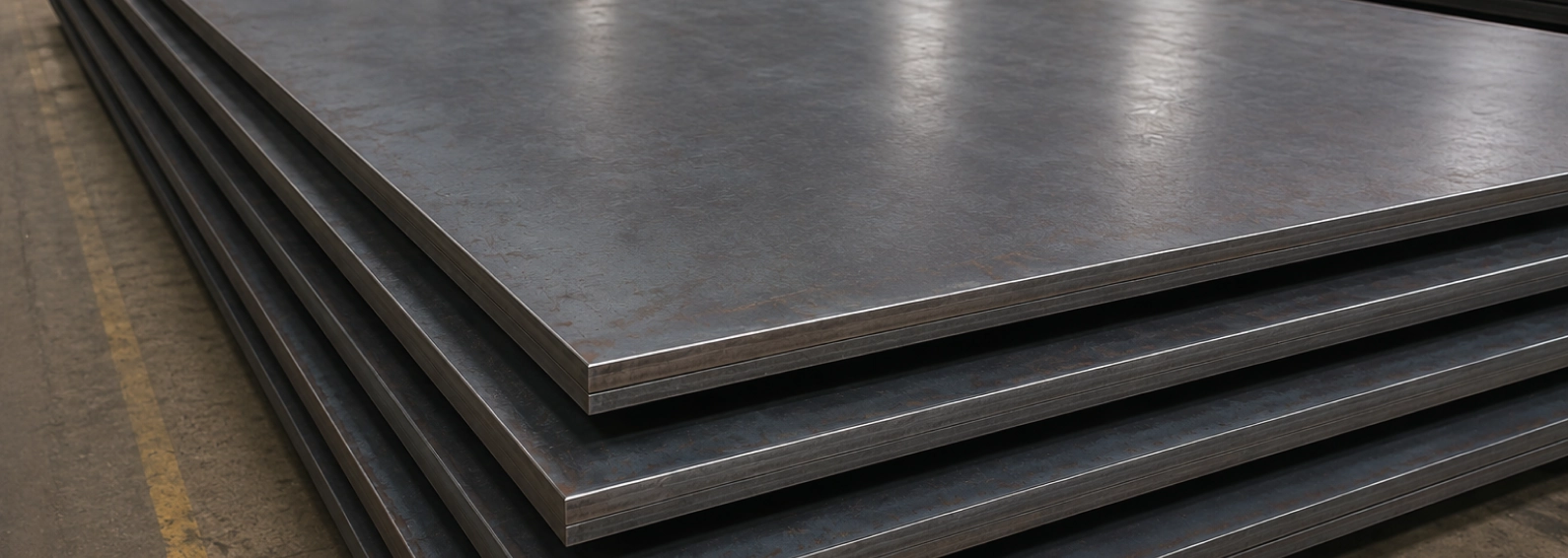
IS 2062 E250 BR Carbon Steel Sheets and Plates are among the most widely used structural steel products in India. Manufactured in accordance with the Indian Standard IS 2062, E250 BR grade is designed for general engineering, fabrication, construction, and industrial applications where dependable mechanical strength and excellent fabrication characteristics are required.
The designation E250 indicates a minimum yield strength of 250 MPa, while BR (Base Requirement) signifies compliance with the standard’s basic quality requirements. Due to its balanced mechanical properties, weldability, and cost-effectiveness, E250 BR plates are extensively used across infrastructure, manufacturing, transportation, and fabrication sectors.
Compared to IS 2062 E350 BR Carbon Steel Sheets and Plates, E250 BR offers lower yield strength but provides an economical solution for applications where higher load-bearing capacity is not required. While IS 2062 E350 BR is commonly selected for heavy structural and high-strength engineering applications, E250 BR remains the preferred choice for general fabrication and standard structural projects.
The grade is particularly valued for projects requiring reliable structural performance, ease of processing, excellent weldability, and wide availability across various thickness ranges.
Mechanical Properties
| Property | Value | Unit |
|---|---|---|
| Yield Strength (min.) | 250 | MPa |
| Tensile Strength | 410 – 540 | MPa |
| Elongation (min.) | 23 | % |
| Hardness | ~120 – 180 | HB |
| Density | 7.85 | g/cm³ |
| Modulus of Elasticity | 200 | GPa |
Chemical Composition
| Element | Max. Content (%) |
|---|---|
| Carbon (C) | 0.23 |
| Manganese (Mn) | 1.50 |
| Sulfur (S) | 0.045 |
| Phosphorus (P) | 0.045 |
| Silicon (Si) | 0.40 |
The controlled chemistry contributes to good weldability, ease of fabrication, and consistent mechanical performance across various applications.
Equivalent Grades
IS 2062 E250 BR is often compared with:
- ASTM A36
- EN S235JR
- JIS SS400
Equivalent selection should always be verified against project specifications and applicable design codes.
Applications
IS 2062 E250 BR sheets and plates are widely used in fabrication and structural engineering industries:
- Structural Fabrication — Used for columns, base plates, support structures, trusses, platforms, and industrial buildings where reliable strength and fabrication flexibility are required.
- Engineering Equipment Manufacturing — Fabricated into machine frames, equipment housings, support brackets, and industrial assemblies requiring good machinability and weldability.
- Material Handling Systems — Utilized in conveyors, transfer systems, storage units, and handling equipment operating under moderate loading conditions.
- Industrial Infrastructure Projects — Widely used in factories, warehouses, logistics parks, and commercial developments where structural steel forms a major component.
- Transportation Equipment — Applied in trailer bodies, vehicle chassis components, transport platforms, and fabrication-intensive transport equipment.
- General Fabrication Industry — Preferred for tanks, bins, hoppers, fabrication components, and custom-built engineering structures.
- Construction Sector — Used in bridges, walkways, staircases, and fabricated structural assemblies across infrastructure projects.
Weldability & Processing
- Weldability:IS 2062 E250 BR offers excellent weldability due to its controlled carbon content.
- Compatible with SMAW, MIG, TIG, and submerged arc welding processes.
- Minimal preheating requirements for standard thicknesses.
- Suitable for shop and site fabrication environments.
- Forming & Machining:The grade can be readily cut, drilled, machined, bent, and formed using conventional fabrication methods.
- Excellent cold-forming characteristics.
- Suitable for plasma, laser, and oxy-fuel cutting.
- Easy machining for fabricated engineering components.
IS 2062 E250 BR vs IS 2062 E350 BR
| Property | E250 BR | E350 BR |
|---|---|---|
| Yield Strength | 250 MPa | 350 MPa |
| Tensile Strength | 410–540 MPa | 490–630 MPa |
| Load Carrying Capacity | Moderate | Higher |
| Fabrication Ease | Excellent | Very Good |
| Typical Application | General Structures | Heavy Structures |
Quality Assurance
- Mechanical Testing — Each plate undergoes testing for yield strength, tensile strength, and elongation in accordance with IS 2062 requirements. These tests confirm the material’s suitability for structural and fabrication applications.
Mechanical verification ensures consistent performance across different thicknesses and fabrication conditions. - Dimensional Accuracy — Sheets and plates are inspected for thickness tolerance, flatness, width, and length accuracy. Maintaining dimensional consistency is essential for fabrication quality and structural fit-up.
Accurate dimensions help reduce wastage and improve fabrication efficiency. - Weldability Tests —The material is assessed for weldability to ensure reliable fabrication performance. Proper weldability minimizes the risk of cracking and ensures durable welded joints.
This is particularly important in structural fabrication where welding forms the primary joining method.
FAQs
E250 BR performs exceptionally well in fabrication-intensive projects due to its combination of weldability, machinability, and cost-effectiveness. Fabricators often prefer this grade because it is easy to process and readily available. Its predictable mechanical properties help maintain consistency across large production batches, reducing fabrication complexity and project delays.
The selection typically depends on load requirements, design specifications, and project economics. For structures operating under moderate loading conditions, E250 BR often provides sufficient performance at a lower material cost. Choosing a higher-strength grade unnecessarily can increase procurement costs without delivering significant engineering benefits.
Yes, E250 BR plates are widely processed using laser cutting, CNC plasma cutting, and automated fabrication systems. Their consistent chemistry and mechanical properties support accurate cutting operations. This makes them highly suitable for precision fabrication industries requiring repeatability and production efficiency.
Infrastructure, fabrication, transportation, warehousing, and engineering equipment manufacturing are among the largest consumers of E250 BR steel plates. Its versatility makes it suitable for a broad range of structural and industrial applications where extreme strength levels are not required.
Buyers should verify material traceability, mill test certificates, dimensional compliance, and stock availability. Consistent quality and reliable delivery capability are equally important. For project-based procurement, third-party inspection and documentation review may also be beneficial to ensure compliance.

Products
Industry We Serve
- Oil & Gas industries
- Chemical process industries
- Pump and valve in high pressure component
- Food industries
- Pulp and paper industry
- Aerospace industry
- Power plant
- Mechanical component
- Sugar industry
- Cement industry