
IBR Pipes Supplier and Exporter
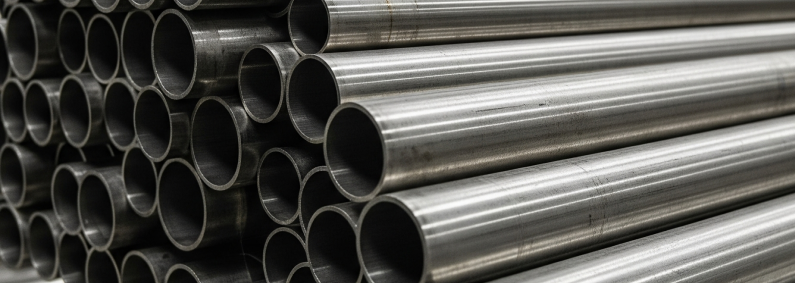
In industries where steam generation, pressure handling, and regulatory compliance are critical, IBR Pipes play a vital role. IBR pipes are specifically manufactured and certified in accordance with the Indian Boiler Regulations (IBR), making them mandatory for use in boiler and pressure piping systems in India.
IBR certification is not just a material specification — it is a compliance framework that ensures pipes meet stringent requirements for material traceability, testing, inspection, and documentation. These pipes are widely used in power plants, refineries, petrochemical industries, and process plants, where safety and performance cannot be compromised.
As an IBR pipes supplier and exporter, providing fully certified pipes with complete documentation (Form III-C, IBR stamping, and inspection approvals) is essential for project acceptance, especially in EPC and government-regulated projects.
Common Material Grades Used for IBR Pipes
IBR pipes are typically supplied in approved pressure-grade materials such as:
- ASTM A106 Grade B
- ASTM A106 Grade C
- ASTM A335 P11
- ASTM A335 P22
Mechanical Properties
| Property | Value Range | Unit |
|---|---|---|
| Yield Strength | 240 – 415+ | MPa |
| Tensile Strength | 415 – 760 | MPa |
| Elongation | ≥ 20 | % |
| Hardness | ~120 – 240 | HB |
| Density | 7.85 | g/cm³ |
| Modulus of Elasticity | 200 | GPa |
IBR Certification & Documentation
IBR pipes must comply with strict regulatory requirements, including:
- IBR Form III-C Certification — Confirms compliance with IBR standards
- Material Test Certificates (MTC) — Ensures traceability of raw material
- IBR Stamping — Physical marking on pipes indicating approval
- Third-Party Inspection Reports — Verification by authorized agencies
- Hydrostatic & NDT Testing Records — Ensures pressure integrity
Proper documentation is mandatory for installation approval and regulatory clearance.
Applications of IBR Pipes
IBR pipes are used in high-pressure and high-temperature systems where regulatory compliance is mandatory:
- Boiler & Steam Piping Systems — Main steam lines, superheater lines, and auxiliary piping in industrial boilers and power plants.
- Thermal Power Plants — Critical piping systems handling high-pressure steam and condensate flow.
- Refineries & Petrochemical Plants — Process piping systems operating under elevated pressure and temperature conditions.
- Chemical Processing Units — Reactors and pipelines requiring compliance with pressure regulations.
- Sugar & Process Industries — Steam distribution pipelines in process plants and manufacturing units.
- EPC & Government Projects — Mandatory use in projects governed by Indian Boiler Regulations.
- Pressure Vessel Connectivity — Piping connected to pressure vessels requiring certified materials.
Weldability & Processing
Weldability:
IBR pipes offer good weldability depending on the material grade.
- Preheating may be required for alloy steel grades
- Controlled welding procedures are essential
Fabrication Considerations:
- Must comply with IBR-approved welding procedures
- Fabrication must be performed by certified personnel
- Documentation of welding procedures is mandatory
Quality Assurance
- Mechanical Testing: IBR pipes undergo testing for yield strength, tensile strength, and elongation as per applicable standards. These tests ensure performance under high-pressure and temperature conditions. Additional testing, such as hydrostatic testing, ensures the pipe can withstand operating pressure without leakage or failure.
- Dimensional Accuracy: Pipes are inspected for outer diameter, wall thickness, length, and straightness to ensure compliance with specified tolerances. Dimensional accuracy is critical for proper fit-up in pressure piping systems.
Precise dimensions reduce installation errors and improve weld joint quality in critical applications. - Weldability Tests: Material is evaluated to ensure compatibility with approved welding procedures. Weld quality is critical for maintaining pressure integrity in IBR systems. Controlled composition and proper welding techniques ensure strong and defect-free joints in boiler and pressure piping applications.
FAQs
Before installation, IBR pipes must be approved by a competent authority, including verification of Form III-C certification and inspection reports. Proper documentation submission is mandatory. Inspection by IBR authorities or authorized agencies may be required before commissioning. This ensures compliance with safety regulations.
No, non-IBR pipes cannot be retroactively certified as IBR pipes. Certification must be obtained during the manufacturing and inspection stages. Using non-IBR pipes in regulated systems can lead to rejection and safety risks. Proper sourcing is essential from the beginning.
Third-party inspection ensures that pipes meet all IBR requirements, including material properties and testing. It provides independent verification of quality. Inspection reports are often required for project approval. This reduces risk and ensures compliance.
IBR certification may increase lead time due to inspection and documentation requirements. Planning procurement in advance is essential. Delays in certification can impact project schedules. Coordinating with suppliers and inspectors helps avoid delays.
Buyers should verify material grade, IBR certification, documentation, and inspection reports. Traceability and compliance are critical. Ensuring proper certification avoids rejection during project execution. This is especially important in EPC and government projects.

Products
Industry We Serve
- Oil & Gas industries
- Chemical process industries
- Pump and valve in high pressure component
- Food industries
- Pulp and paper industry
- Aerospace industry
- Power plant
- Mechanical component
- Sugar industry
- Cement industry