
ASTM A335 P91 Alloy Steel Pipes
ASTM A335 P91 seamless modified 9Cr-1Mo pipes for main steam and hot reheat lines in power plants, supplied and exported by Riyaarth Overseas, Mumbai.
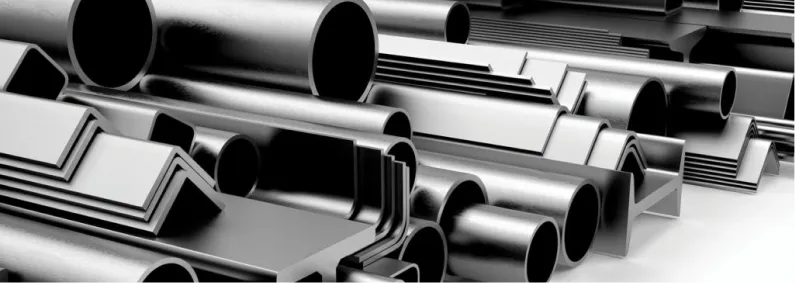
ASTM A335 P91 pipes are seamless modified 9Cr-1Mo alloy steel pipes with controlled additions of vanadium, niobium and nitrogen. Grade P91 (UNS K91560) is a creep strength enhanced ferritic steel, supplied normalised and tempered, with roughly twice the creep strength of P22 at 550 – 600°C.
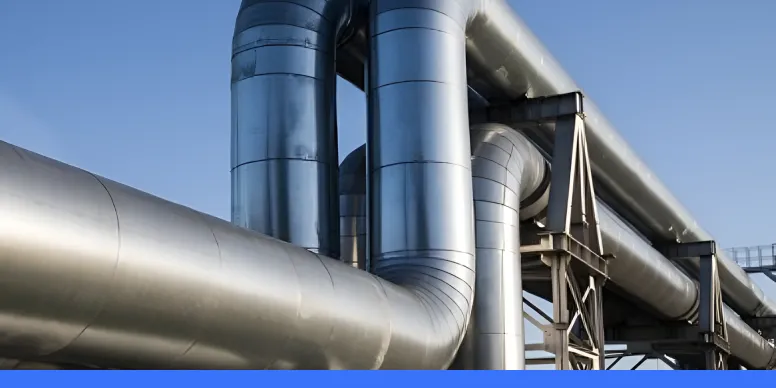
Power plant designers use P91 for main steam and hot reheat piping and headers because the higher strength allows thinner walls, which cuts weight, reduces thermal stress and eases support design. Current editions of ASTM A335 list P91 as Type 1 and Type 2. Riyaarth Overseas supplies and exports ASTM A335 P91 pipes from established seamless mills, with full chemistry, heat treatment and NDT records.
Key Features
High creep strength: Allows thinner walls than P22 for the same pressure and temperature.
Lower thermal stress: Thinner walls reduce through-wall temperature differences during start-up and shut-down.
Oxidation resistance: About 9% chromium gives good resistance to steam oxidation.
Normalised and tempered supply: Pipes are supplied in the controlled heat treated condition that the grade needs for long term strength.
Specifications
| Specification | Details |
|---|---|
| Standard | ASTM A335 / ASME SA335 |
| Grade / UNS | Grade P91 / UNS K91560 |
| Outside diameter range | NPS 1/8 upwards, dimensions to ASME B36.10M |
| Wall thickness / schedule | SCH 10 to SCH 160, STD, XS, XXS, or specified wall |
| Length | Single random, double random and cut lengths |
| Type | Seamless, hot finished or cold drawn |
| Heat treatment | Normalised at 1040 – 1080°C and tempered at 730 – 800°C |
| Ends | Plain ends, bevelled ends to ASME B16.25 |
| Form / finish | Round; black, varnished or pickled, as ordered |
| Test certificate | EN 10204 3.1; 3.2 with third-party inspection (TPI) on request |
Chemical Composition
| Element | Composition (%) |
|---|---|
| Carbon (C) | 0.08 – 0.12 |
| Manganese (Mn) | 0.30 – 0.60 |
| Phosphorus (P) | 0.020 max |
| Sulphur (S) | 0.010 max |
| Silicon (Si) | 0.20 – 0.50 |
| Chromium (Cr) | 8.00 – 9.50 |
| Molybdenum (Mo) | 0.85 – 1.05 |
| Nickel (Ni) | 0.40 max |
| Vanadium (V) | 0.18 – 0.25 |
| Niobium (Nb) | 0.06 – 0.10 |
| Nitrogen (N) | 0.030 – 0.070 |
| Aluminium (Al) | 0.02 max |
| Titanium (Ti) | 0.01 max |
| Zirconium (Zr) | 0.01 max |
Limits shown are for P91 Type 1. P91 Type 2 in current editions of ASTM A335 has tighter limits on several elements; state the type on the order.
Mechanical Properties
| Property | Value |
|---|---|
| Tensile strength | 585 MPa (85 ksi) min |
| Yield strength | 415 MPa (60 ksi) min |
| Elongation, longitudinal | 20% min |
| Elongation, transverse | 13% min |
| Hardness | 250 HBW max |
| Density | 7.77 g/cm³ (approx.) |
Equivalent Grades
| System | Equivalent |
|---|---|
| UNS | K91560 |
| ASME | SA335 P91 |
| JIS G 3458 | STPA 28 |
| EN 10216-2 | X10CrMoVNb9-1 (1.4903) |
Testing and Inspection
Creep strength enhanced ferritic steels need tighter control than plain chrome-moly grades. Testing to ASTM A335 / A999 and the order includes:
- Hydrostatic or non-destructive electric test: on every length, with ultrasonic testing commonly specified for power plant use.
- Tensile and hardness tests: to confirm strength and that hardness is within limits after normalising and tempering.
- Flattening and flaring tests: to confirm ductility.
- Positive material identification (PMI): to confirm Cr, Mo and the micro-alloying elements on every length.
- Heat treatment records: normalising and tempering temperatures and times on the mill certificate.
- Third-party and IBR inspection: available on request for boiler applications in India.
Why Choose Riyaarth Overseas
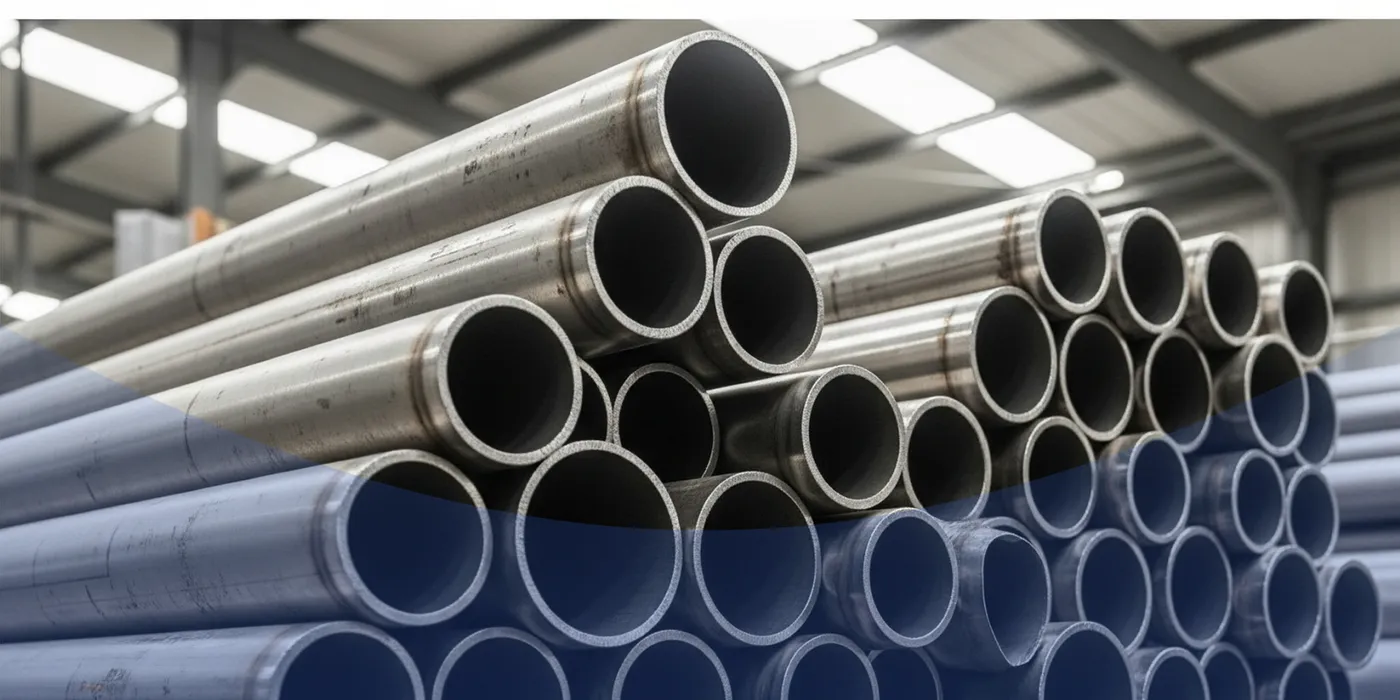
Riyaarth Overseas sources ASTM A335 P91 pipes from established seamless mills with controlled normalising and tempering. Pipes are supplied in standard or specified wall thickness, with bevelled ends, EN 10204 3.1 certificates, heat treatment charts and PMI reports, and 3.2 or IBR inspection on request. Send your line list for a quick quote.
Applications
Frequently asked questions
What is P91 Type 2?
Type 2 is a variant in ASTM A335 with tighter limits on several elements and residuals, intended to improve long term creep performance. The order should state Type 1 or Type 2.
Why is hardness checked on P91 pipe?
Hardness shows whether normalising and tempering were done correctly. Results outside the range can mean poor tempering or incorrect heat treatment, which lowers creep strength.
What fittings go with P91 pipe?
ASTM A234 WP91 butt weld fittings and ASTM A182 F91 forged flanges and fittings are used with P91 pipe.
How is P91 welded?
With matching 9Cr-1Mo-V filler, controlled preheat and interpass temperature, and a post-weld heat treatment in the range set by the code, typically around 740 – 760°C.