
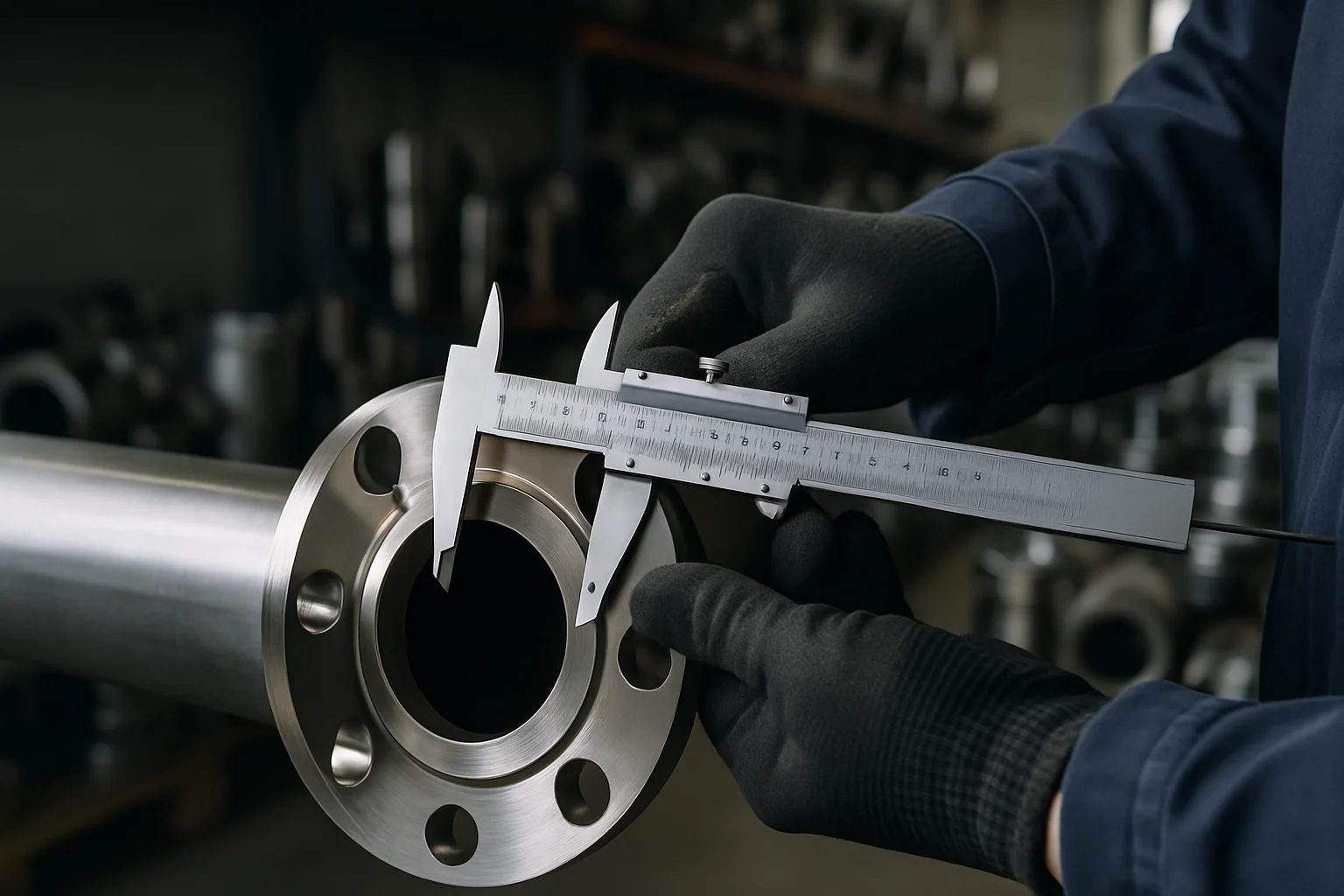
Stainless Steel 316H Pipes & Tubes
Stainless steel 316H pipes and tubes (UNS S31609) to ASTM A312 and A213 for high temperature pressure service, stocked and exported by Riyaarth Overseas.
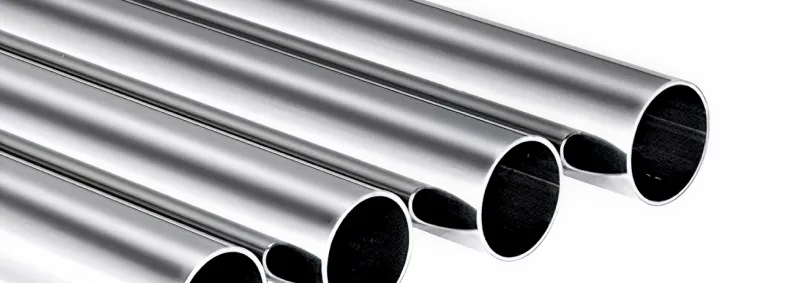
Stainless steel 316H (UNS S31609) is the high carbon version of 316, with carbon controlled between 0.04% and 0.10%. The higher carbon gives better short and long term strength at temperatures above about 500 °C, which is why 316H is chosen for pressure parts in hot service. It keeps the 2% to 3% molybdenum of 316, so it also resists pitting better than 304H.
For pipes and tubes, 316H is covered by ASTM A312 and ASTM A213, which also require a coarser grain size suited to creep service. Riyaarth Overseas supplies and exports 316H seamless and welded pipes and tubes, often dual certified as 316/316H, for refinery, petrochemical and power projects.
Key Features
Creep strength: Controlled carbon and a coarse grain structure give higher allowable stresses at elevated temperature than 316L.
Molybdenum bearing: Mo content of 2.00% to 3.00% improves resistance to pitting and to many reducing acids.
Heat treated: Supplied solution annealed, with grain size controlled as required for H grades.
Code use: 316H is listed in ASME Section II for pressure parts operating at high temperature.
Specifications
| Parameter | Details |
|---|---|
| Standards | ASTM A312 / ASME SA312 (pipe), ASTM A213 / ASME SA213 (seamless tube), ASTM A376 (high temperature pipe), ASTM A249 (welded tube) |
| Grade / UNS | TP316H (S31609) |
| Outside diameter range | Pipe: 1/8 in to 24 in NPS; tube: from 6 mm OD upward |
| Wall thickness / schedule | Schedule 10S to 160 and XXS; tube wall to order |
| Length | Single random, double random and cut lengths |
| Type | Seamless and welded |
| Ends | Plain end, bevelled end |
| Form / finish | Round; annealed and pickled |
| Test certificate | EN 10204 3.1 mill test certificate as standard; EN 10204 3.2 with third-party inspection on request |
For pressure parts in hot service, the order should state 316H explicitly, or dual 316/316H, rather than 316. Standard 316 has no lower carbon limit and may be supplied with carbon too low for the allowable stresses used in design.
Chemical Composition
Limits per ASTM A312.
| Element | Composition (%) |
|---|---|
| Carbon (C) | 0.04 – 0.10 |
| Manganese (Mn) | 2.00 max |
| Phosphorus (P) | 0.045 max |
| Sulphur (S) | 0.030 max |
| Silicon (Si) | 1.00 max |
| Chromium (Cr) | 16.0 – 18.0 |
| Nickel (Ni) | 11.0 – 14.0 |
| Molybdenum (Mo) | 2.00 – 3.00 |
Mechanical Properties
Room temperature minimums per ASTM A312. The benefit of 316H shows at high temperature, where ASME Section II Part D lists higher allowable stresses for it than for 316L.
| Property | Value |
|---|---|
| Tensile strength, min | 515 MPa (75 ksi) |
| Yield strength (0.2%), min | 205 MPa (30 ksi) |
| Elongation in 50 mm, min | 35% longitudinal, 25% transverse |
| Hardness | HBW 192 max / HRB 90 max (ASTM A213, A249, A269 tubes) |
| Grain size | ASTM No. 7 or coarser (ASTM A213 H grades) |
Equivalent Grades
| System | Designation |
|---|---|
| UNS | S31609 |
| EN / Werkstoff | 1.4919 (X6CrNiMo17-13-2) |
| ASME | SA312 TP316H, SA213 TP316H |
EN 1.4919 is the European high temperature grade closest to 316H. 1.4401 (316) is not a direct substitute because it has no lower carbon limit.
Testing and Inspection
316H pipes and tubes are tested to the ordered standard, with checks that are specific to H grades.
- Hydrostatic or eddy current test: On every length per ASTM A312 or A213.
- Carbon verification: Product analysis confirms carbon is within the 0.04% to 0.10% band.
- Grain size determination: Confirms the coarse grain needed for creep service.
- Flattening and flaring tests: To confirm ductility.
- Positive material identification: PMI to confirm molybdenum and grade.
- Third-party inspection: Witness inspection with EN 10204 3.2 certificates when ordered.
The mill test certificate shows the measured carbon, the solution annealing temperature and the grain size result, so that the inspector can confirm H grade requirements before the material is released.
Why Choose Riyaarth Overseas
Riyaarth Overseas sources 316H pipes and tubes from mills experienced in H grade heat treatment and supplies them with full EN 10204 3.1 documentation and heat traceability. We cut to length, pack for export, and can arrange third-party inspection. Send your line list for a quick quotation.
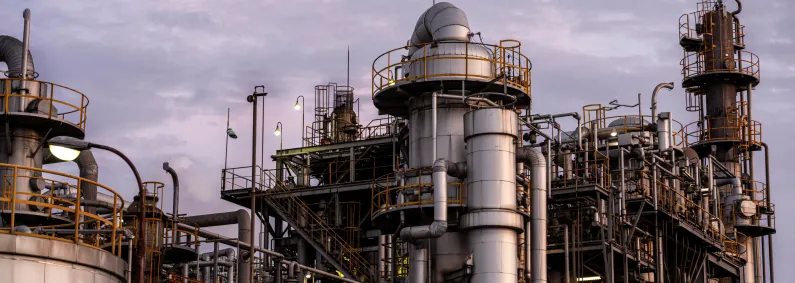
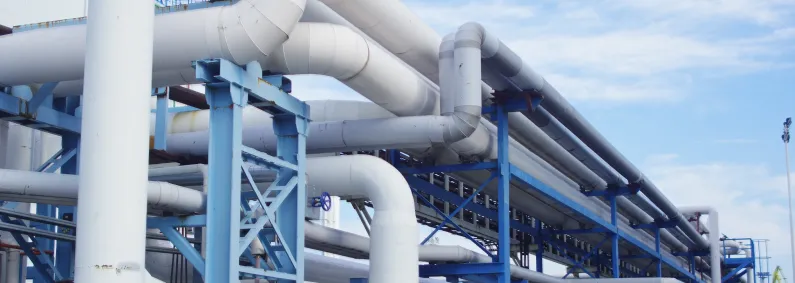
Applications
Frequently asked questions
What is the difference between 316, 316L and 316H?
All three have the same chromium, nickel and molybdenum ranges. 316L has carbon of 0.035% max for welding, 316 allows up to 0.08%, and 316H requires 0.04% to 0.10% carbon for strength at high temperature.
Why does 316H need a grain size requirement?
A coarser grain improves creep resistance. ASTM A213 requires H grades to have a grain size of ASTM No. 7 or coarser.
Can 316H be dual certified with 316?
Yes. Material with carbon in the 0.04% to 0.08% range that meets all other requirements can be certified as both 316 and 316H.
Is 316H suitable for low temperature or wet corrosive service?
316H is not normally chosen for wet corrosive service with welding, because its higher carbon raises the risk of sensitisation. 316L is preferred there.