
Stainless Steel 309 Pipes & Tubes
Stainless steel 309S and 309H pipes and tubes to ASTM A312 and A213 for high temperature, oxidation resistant duty, stocked and exported by Riyaarth Overseas.
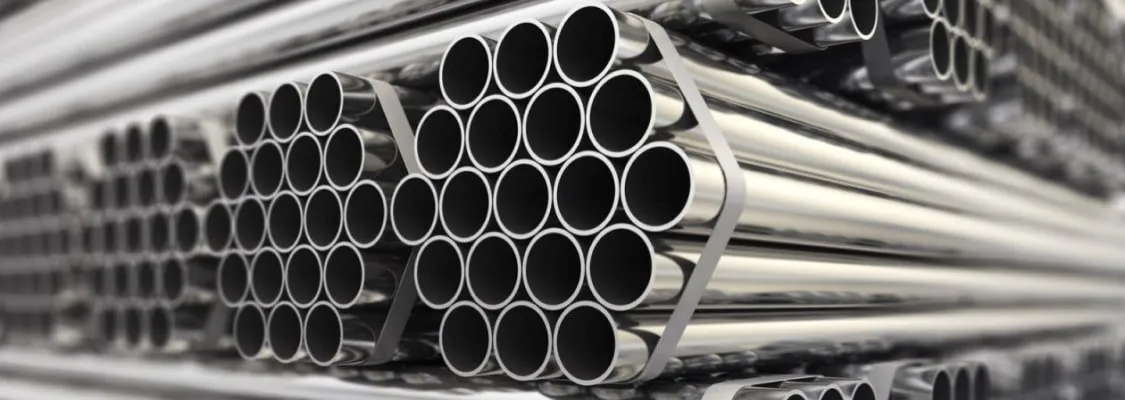
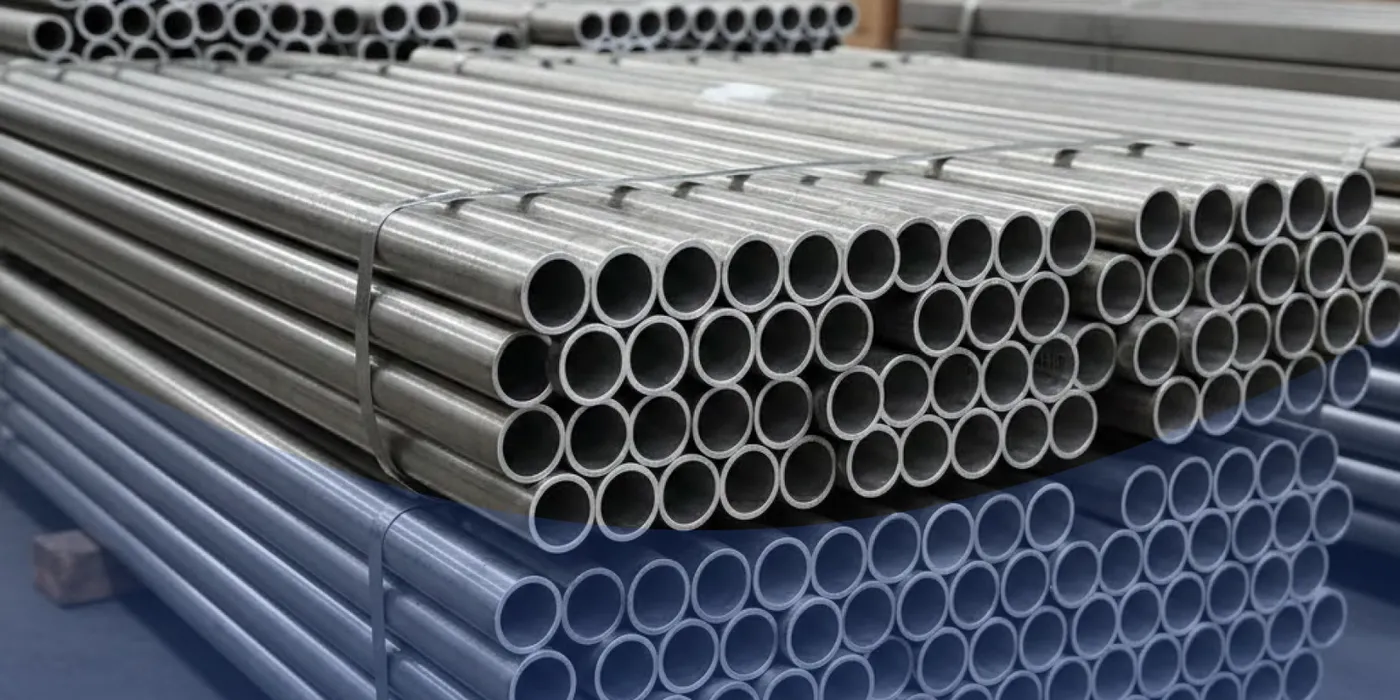
Stainless steel 309 is a heat resistant austenitic grade with about 23% chromium and 13% nickel. In pipe and tube form it is supplied mainly as 309S (UNS S30908), the low carbon version that welds well, and 309H (UNS S30909), with controlled carbon for better creep strength at high temperature. ASTM A312 covers both for pipe, and ASTM A213 covers them for boiler and heat exchanger tubes.
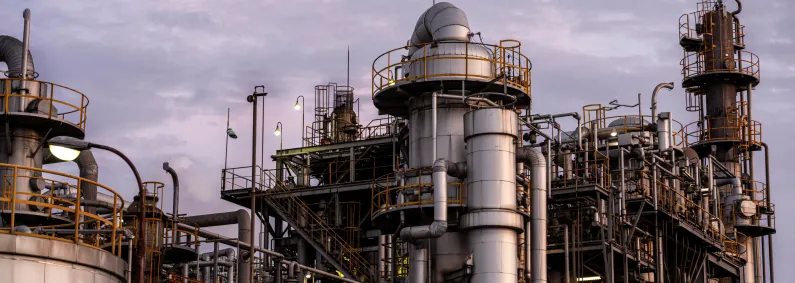
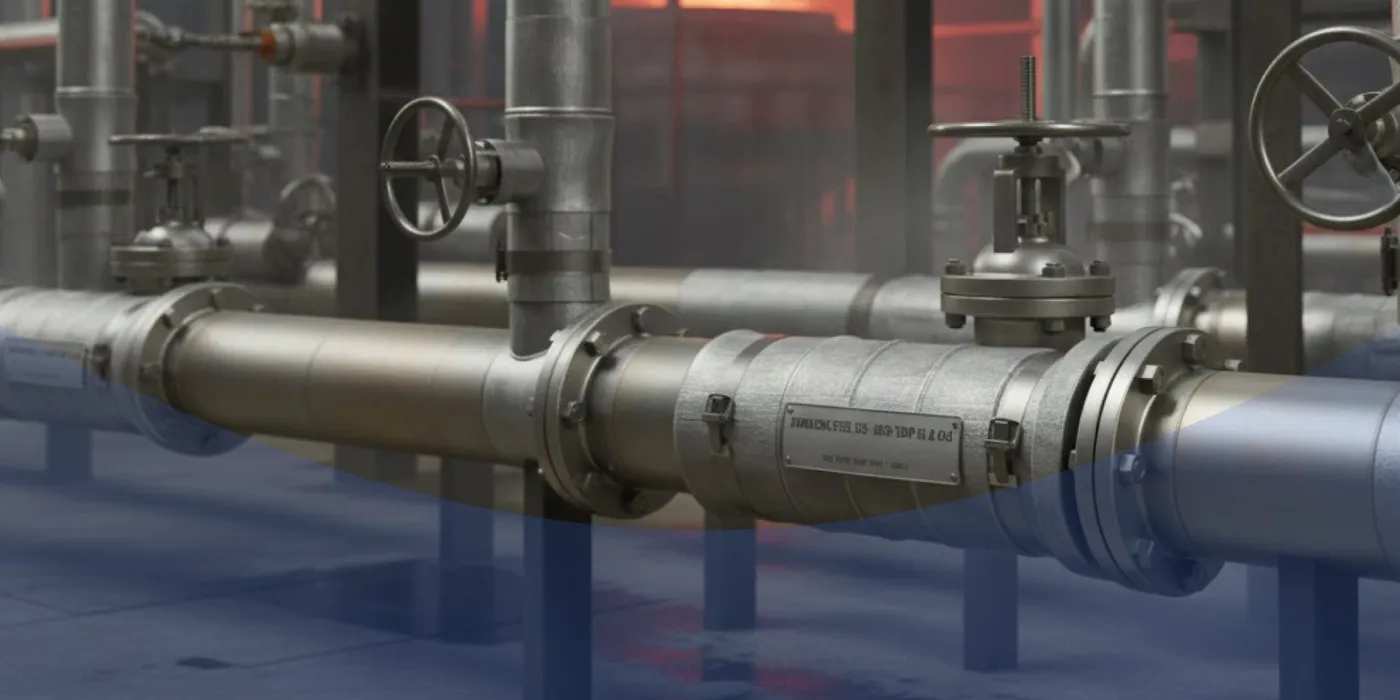
The high chromium content forms a protective oxide scale, so 309 resists oxidation well above the range of 304 and 316. Buyers choose it for furnace parts, heat treatment equipment and hot gas lines. Riyaarth Overseas supplies and exports 309S and 309H pipes and tubes, seamless and welded, with full mill documentation.
Key Features
Oxidation resistance: Resists scaling in air to around 1000 °C in continuous service, with a lower limit under frequent thermal cycling.
Strength at temperature: 309H, with carbon held between 0.04% and 0.10%, retains better creep strength for pressure parts at high temperature.
Weldable: 309S has a lower carbon limit and is readily welded with matching 309 filler metals.
Sulphur tolerance: Its higher chromium content gives better resistance to sulphur bearing hot gases than 304.
Specifications
| Parameter | Details |
|---|---|
| Standards | ASTM A312 / ASME SA312 (pipe), ASTM A213 / ASME SA213 (seamless tube), ASTM A249 / ASME SA249 (welded tube) |
| Grades / UNS | TP309S (S30908), TP309H (S30909) |
| Outside diameter range | Pipe: 1/8 in to 24 in NPS; tube: from 6 mm OD upward |
| Wall thickness / schedule | Schedule 5S to 160 and XXS; tube wall to order |
| Length | Single random, double random and cut lengths |
| Type | Seamless and welded |
| Ends | Plain end, bevelled end |
| Form / finish | Round; annealed and pickled |
| Test certificate | EN 10204 3.1 mill test certificate as standard; EN 10204 3.2 with third-party inspection on request |
Choose 309S for welded fabrications and general furnace parts, and 309H where the part carries pressure or load at high temperature and the design code calls for an H grade. Where the order allows, mills can supply material that meets both.
Chemical Composition
Limits per ASTM A312.
| Element | Composition (%) |
|---|---|
| Carbon (C) | 0.08 max (TP309S), 0.04 – 0.10 (TP309H) |
| Manganese (Mn) | 2.00 max |
| Phosphorus (P) | 0.045 max |
| Sulphur (S) | 0.030 max |
| Silicon (Si) | 1.00 max |
| Chromium (Cr) | 22.0 – 24.0 |
| Nickel (Ni) | 12.0 – 15.0 |
| Molybdenum (Mo) | 0.75 max (TP309S) |
Mechanical Properties
Room temperature minimums per ASTM A312. For design at elevated temperature, allowable stresses are taken from ASME Section II Part D for the grade and product form.
| Property | Value |
|---|---|
| Tensile strength, min | 515 MPa (75 ksi) |
| Yield strength (0.2%), min | 205 MPa (30 ksi) |
| Elongation in 50 mm, min | 35% longitudinal, 25% transverse |
| Hardness | HBW 192 max / HRB 90 max (ASTM A213, A249, A269 tubes) |
| Density | approx. 8.0 g/cm³ |
Equivalent Grades
| Grade | UNS | EN / Werkstoff | JIS |
|---|---|---|---|
| 309S | S30908 | 1.4833 / X12CrNi23-13 | SUS309S |
| 309H | S30909 | n/a (no direct EN equivalent) | n/a |
EN 1.4833 is the closest match to 309S. Cast heat resistant equivalents exist, but they are not interchangeable with wrought pipe and tube.
Testing and Inspection
Grade 309 pipes and tubes are tested to the ordered ASTM standard, with options for project specifications.
- Hydrostatic or eddy current test: On every length as required by ASTM A312 and A213.
- Flattening and flaring tests: To confirm the ductility of the wall.
- Grain size check: Required for 309H to ASTM A213, confirming a grain size suited to creep service.
- Positive material identification: Confirms chromium and nickel levels against 309.
- Mechanical tests: Tensile and hardness tests per heat and lot.
- Third-party inspection: Witness inspection and EN 10204 3.2 certification on request.
Certificates record the heat treatment temperature and the measured carbon content, which helps the buyer confirm whether the material meets 309S, 309H or both.
Why Choose Riyaarth Overseas
Riyaarth Overseas sources 309S and 309H pipes and tubes from reliable mills and keeps common sizes ready for dispatch. We supply cut lengths with EN 10204 3.1 certificates and heat traceability, and pack for export in wooden boxes or bundles. Send your sizes and quantities for a fast quote.
Applications
Frequently asked questions
What is the difference between 309S and 309H?
309S has a maximum carbon of 0.08% and is preferred for welded fabrications. 309H has carbon between 0.04% and 0.10% for better creep strength in pressure service at high temperature.
How hot can 309 stainless steel be used?
Published mill data gives oxidation resistance in air to around 1000 °C in continuous service, lower under cyclic heating. Design limits for pressure parts come from the applicable code, such as ASME Section II.
Is 309 better than 304 at high temperature?
Yes. With about 23% chromium and 13% nickel, 309 forms a more stable oxide scale and resists oxidation at higher temperatures than 304.
Which filler metal is used to weld 309?
Matching filler metals such as ER309 or ER309L are normally used. 309 fillers are also widely used to join stainless steel to carbon steel.