
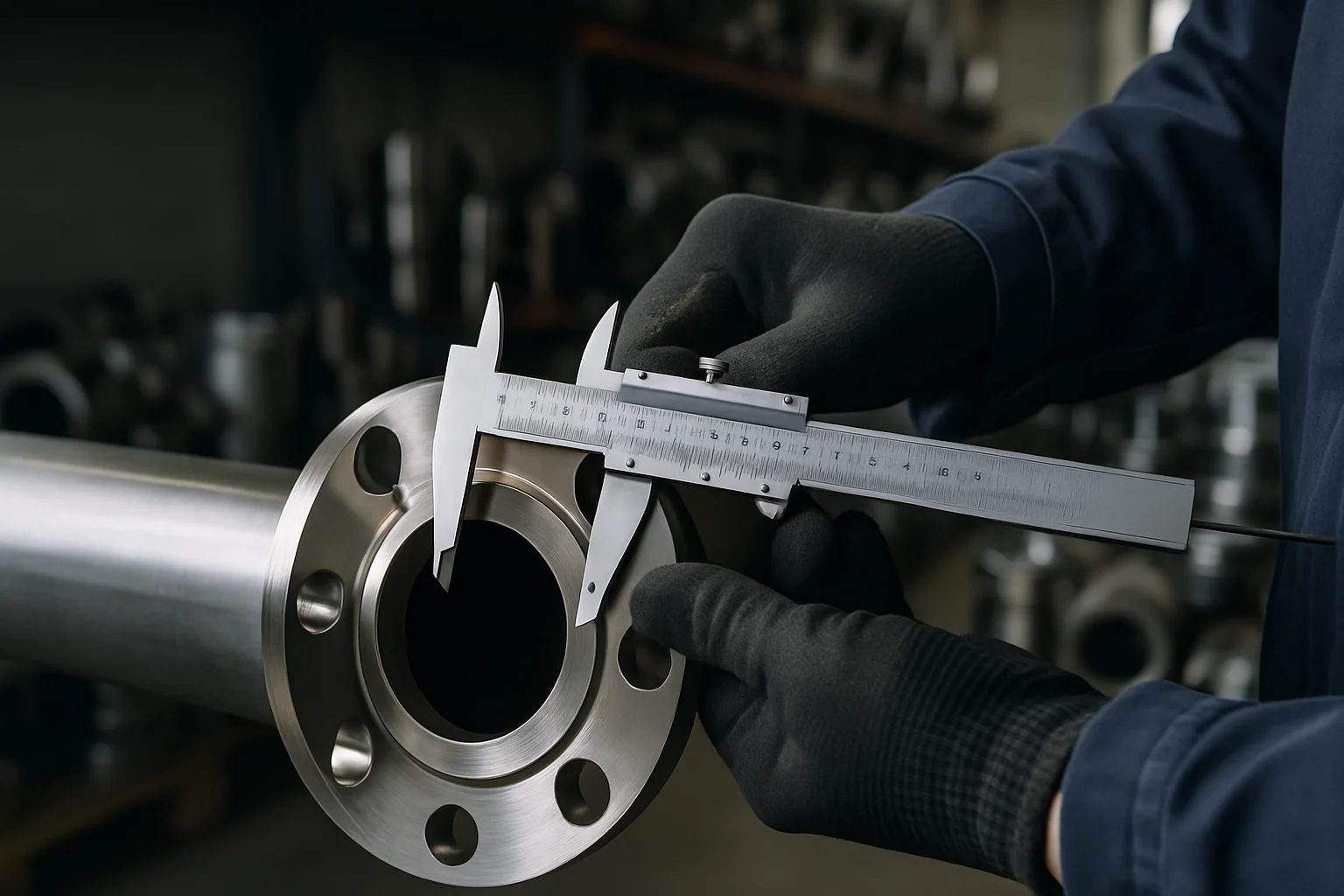
Titanium Grade 7 Pipes & Tubes
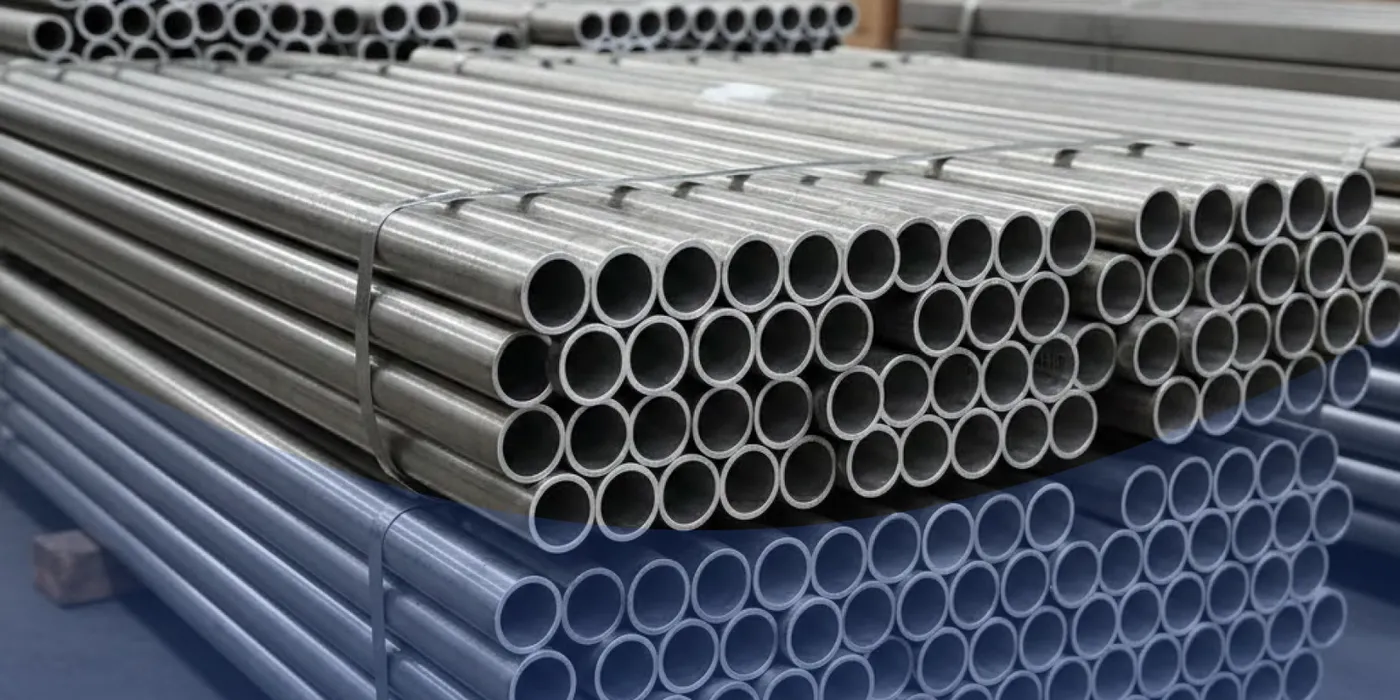
Titanium Grade 7 (UNS R52400, Ti-0.15Pd) pipes and tubes to ASTM B338, B861 and B862 for reducing acids and hot brine, supplied by Riyaarth Overseas.
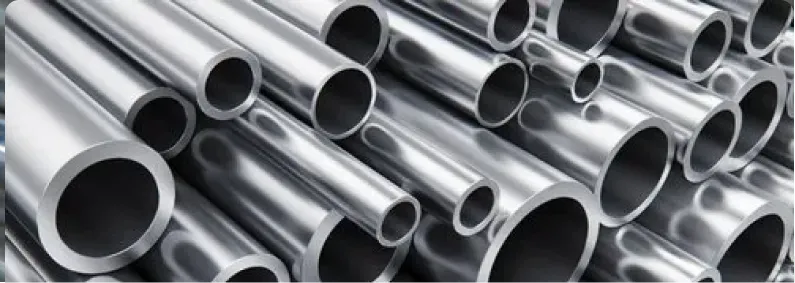
Titanium Grade 7, UNS R52400 and Werkstoff 3.7235, is commercially pure titanium with a small addition of palladium, 0.12 to 0.25 percent. The palladium makes the protective oxide film much more stable in reducing acids and hot chloride solutions, so Grade 7 resists crevice corrosion and general corrosion where Grade 2 would be attacked.
Its mechanical properties are the same as Grade 2, so the two grades are designed and fabricated in the same way. Tubes are produced to ASTM B338, seamless pipe to ASTM B861 and welded pipe to ASTM B862, each with matching ASME SB designations.
Riyaarth Overseas supplies and exports Titanium Grade 7 pipes and tubes to chemical, chlor-alkali, refinery and mining projects, with complete mill test documentation.
Because palladium is a costly addition, Grade 7 is often used only in the parts of a system that see the most aggressive conditions, such as the hot end of a heat exchanger or the crevice areas at tube sheets, while Grade 2 is used elsewhere. The two grades can be welded together with Grade 7 filler metal. Like all titanium, Grade 7 must be welded under full argon shielding, and weld colour is checked to confirm that the joint was protected from air. When enquiring, please give the specification, size, wall, length and form.
Key Features
Resistance to reducing acids: Palladium widens the range of hydrochloric and sulphuric acid concentrations and temperatures in which titanium stays passive.
Crevice corrosion resistance in hot brine: Grade 7 resists crevice corrosion in hot chloride brines at temperatures where Grade 2 can be attacked under gaskets and deposits.
Same strength as Grade 2: Mechanical properties match Grade 2, so designs and welding procedures for Grade 2 can be used with little change.
Good fabricability: Grade 7 forms, flares and welds like commercially pure titanium, using inert gas shielding for all welding.
Specifications
| Parameter | Details |
|---|---|
| Standards | ASTM B338 / ASME SB338 (tubes), ASTM B861 / ASME SB861 (seamless pipe), ASTM B862 / ASME SB862 (welded pipe) |
| Grade / UNS | Titanium Grade 7, UNS R52400, W.Nr. 3.7235 |
| Outside diameter range | Tube from 6.35 mm (1/4 in) OD; pipe sizes on enquiry |
| Wall thickness / schedule | SCH 5S, 10S, 40S, 80S; tube wall in BWG or mm |
| Length | Random and cut lengths |
| Type | Seamless, welded |
| Ends | Plain ends, bevelled ends, threaded ends on request |
| Form / finish | Round, U-bent; annealed, pickled |
| Test certificate | EN 10204 3.1 mill test certificate as standard; EN 10204 3.2 with third-party inspection on request |
Chemical Composition
| Element | Composition (%) |
|---|---|
| Palladium (Pd) | 0.12 – 0.25 |
| Nitrogen (N) | 0.03 max |
| Carbon (C) | 0.08 max |
| Hydrogen (H) | 0.015 max |
| Iron (Fe) | 0.30 max |
| Oxygen (O) | 0.25 max |
| Titanium (Ti) | Balance |
Mechanical Properties
| Property | Value |
|---|---|
| Tensile strength | 50 ksi (345 MPa) min |
| Yield strength, 0.2% offset | 40 – 65 ksi (275 – 450 MPa) |
| Elongation in 2 in (50 mm) | 20% min |
| Density | 4.51 g/cm³ |
Equivalent Grades
| Standard | Designation |
|---|---|
| UNS | R52400 |
| Werkstoff Nr. | 3.7235 |
| Common names | Ti-0.15Pd, Ti Gr 7 |
Testing and Inspection
Titanium Grade 7 pipes and tubes are tested to the ordered ASTM specification. Typical inspection includes:
- Hydrostatic or pneumatic test: Pressure test on each length.
- Eddy current or ultrasonic test: Non-destructive testing of the tube wall.
- Flattening and flaring tests: Ductility checks on each lot.
- Chemical analysis: Confirms palladium and interstitial element levels.
- Dimensional and visual inspection: Full dimensional check against the order.
- Third-party inspection: Witness inspection on request.
Why Choose Riyaarth Overseas
Riyaarth Overseas sources Titanium Grade 7 pipes and tubes from established titanium mills and supplies them in random or cut lengths. Each delivery carries EN 10204 3.1 certificates that show the palladium content and test results for every heat.
Material is packed in wooden boxes for export, and we send prompt quotations against your specifications.
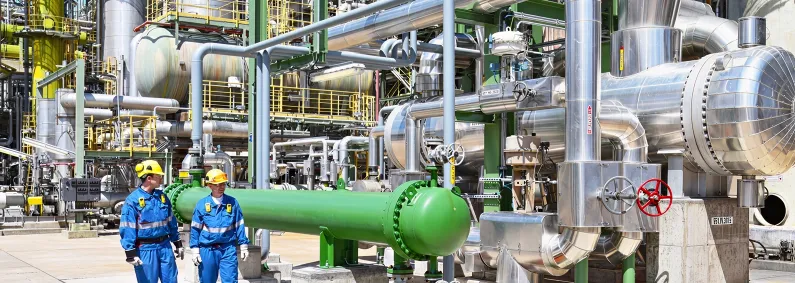
Applications
Frequently asked questions
What is the difference between Titanium Grade 2 and Grade 7?
Grade 7 is Grade 2 with 0.12 to 0.25 percent palladium added. The mechanical properties are the same, but Grade 7 has much better resistance to reducing acids and crevice corrosion in hot brine.
When should Grade 7 be used instead of Grade 2?
Grade 7 is chosen for hot, acidic chloride solutions, dilute hydrochloric or sulphuric acid, and services where crevice corrosion under gaskets is a risk.
Is there a lower-cost alternative to Grade 7?
Grade 16 contains less palladium and gives similar corrosion resistance in many services at lower cost. Grade 12, with nickel and molybdenum, is another option for hot brine.
Which standard covers Titanium Grade 7 tubes?
Grade 7 condenser and heat exchanger tubes are made to ASTM B338 / ASME SB338. Seamless pipe is ordered to ASTM B861 and welded pipe to ASTM B862.